EverQuest Next was Sony Online Entertainment’s plan to rebuild Norrath from scratch: a destructible voxel world, monsters with their own motives, and server events that permanently changed the map. It spent roughly a decade in development, went through four internal reboots, and was cancelled on March 11, 2016 without ever reaching players. This page covers the full arc, the people involved, the real reasons it died, and where the surviving EverQuest games stand today.
EverQuest Next at a glance
| Developer | Sony Online Entertainment, later Daybreak Game Company |
| Engine | ForgeLight, with Voxel Farm voxel technology |
| Planned platforms | Windows PC and PlayStation 4 |
| Development start | As early as 2006 |
| Public reveal | SOE Live, Las Vegas, August 2013 |
| Cancelled | March 11, 2016 |
| Spin-off | Landmark (launched June 2016, closed February 2017) |
The franchise EverQuest Next was meant to succeed
EverQuest (1999)
EverQuest launched on March 16, 1999, developed by Verant Interactive and published by Sony. Brad McQuaid, Steve Clover and Bill Trost designed it under John Smedley’s leadership, and Sony later folded Verant into SOE. It was the first 3D online world to win a mass Western audience, and its habits (corpse runs, camping rare spawns, pulling trains) became genre vocabulary.
Expansions came at a steady clip:
| Expansion | Release |
|---|---|
| The Ruins of Kunark | April 2000 |
| The Scars of Velious | December 2000 |
| The Shadows of Luclin | December 2001 |
| The Planes of Power | October 2002 |
| Dragons of Norrath | February 2005 |
| The Outer Brood (31st) | December 2024 |
McQuaid, the designer most associated with the original game’s group-focused philosophy, died in November 2019.
EverQuest Online Adventures (2003)
The franchise’s console branch launched on PlayStation 2 in 2003. EQOA was a separate, smaller-scale Norrath built for console hardware, and it ran until its servers closed in 2012. Wikipedia lists it alongside EverQuest and EverQuest II as one of the games EQ Next was meant to follow. A fan-run revival project has spent years rebuilding the server side of EQOA, a sign of how attached its small audience remained.
EverQuest II (2004)
EverQuest II arrived in November 2004, set about 500 years after the original, after the moon Luclin shattered. It added voiced NPCs, deeper crafting, player housing and guided questing. SOE ran it alongside the original rather than replacing it. EverQuest II went free to play in late 2011, and EverQuest followed in March 2012.
EverQuest Next development timeline
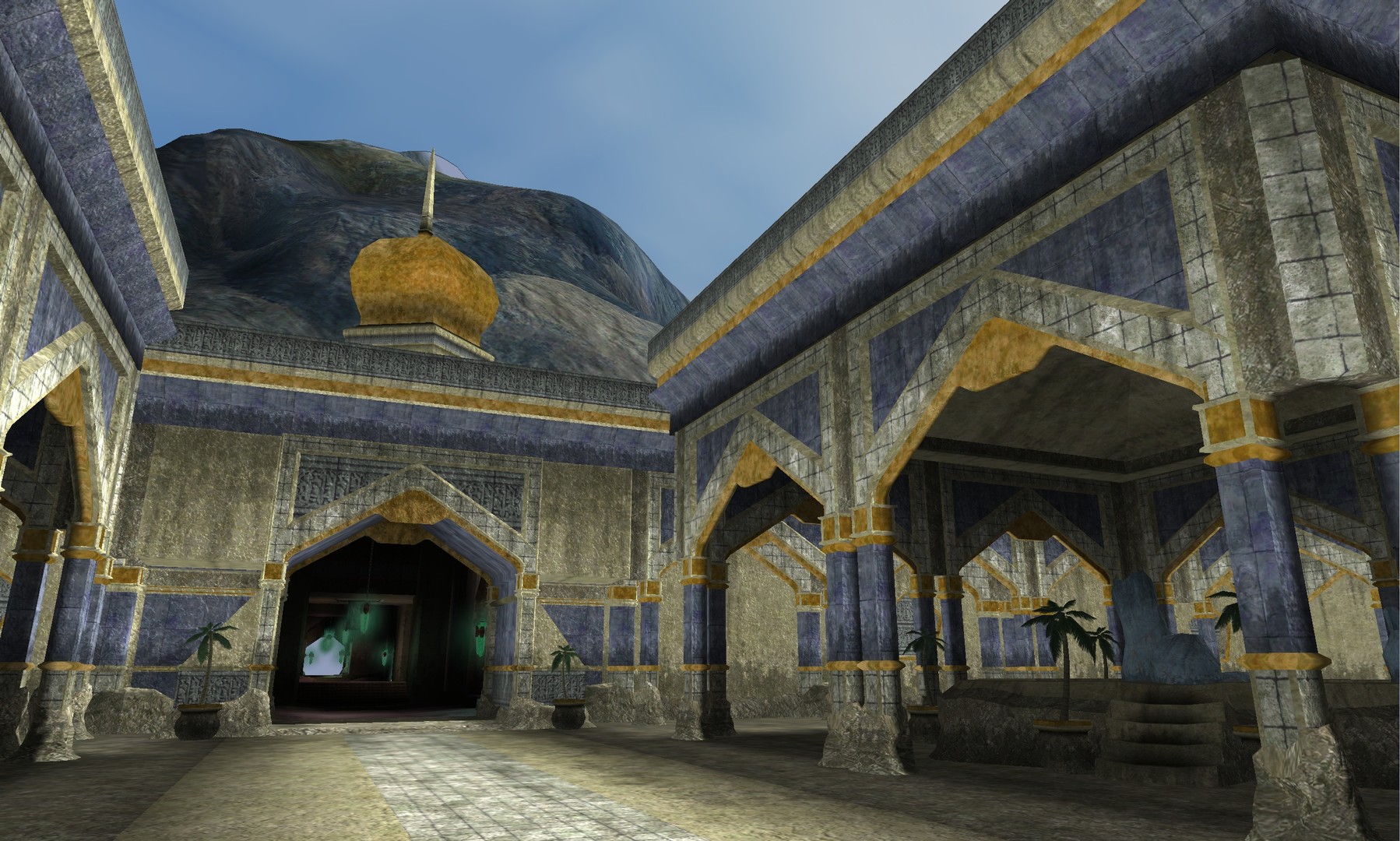
| Date | Milestone |
|---|---|
| 2006 | Early work on a next-generation EverQuest begins |
| 2009 | EverQuest’s 10th anniversary book hints at a new game |
| 2010 | SOE Fan Faire shows early EQ Next concept work |
| 2012 | At SOE Live, John Smedley says the game has been completely redone as a sandbox |
| August 2013 | Full reveal at SOE Live in Las Vegas |
| March 2014 | “EverQuest Next Landmark” is renamed Landmark |
| February 2015 | Sony sells SOE to Columbus Nova; it becomes Daybreak; layoffs follow |
| Early 2015 | Developers publicly show work on the new Qeynos |
| July 2015 | John Smedley leaves Daybreak |
| March 11, 2016 | Daybreak cancels EverQuest Next |
Four reboots before anyone saw it
The 2010 version shown at Fan Faire looked like a conventional theme-park sequel, closer in spirit to EverQuest II than to what came later. SOE’s developers have described scrapping and restarting the design four times before the 2013 reveal. The biggest pivot came at SOE Live 2012, when Smedley told fans the team had thrown out the earlier direction and was building a sandbox instead.
That history matters for the ending. By the time players saw EQ Next, it had already consumed years of budget and staff on versions nobody would ever play.
What SOE promised in 2013
The August 2013 reveal was the most ambitious pitch in the series:
- Destructible voxel terrain. Built on ForgeLight, the engine behind PlanetSide 2, combined with licensed Voxel Farm tech. ForgeLight already handled large battles with many players on screen, and adding voxels meant players could blast through walls and dig down into hidden underground layers.
- Emergent AI from Storybricks. NPCs were meant to act on desires. Orcs would settle where they felt safe and raid where they saw opportunity, so camps would move instead of sitting on fixed spawn points.
- Multiclassing. Players would collect more than 40 classes and mix abilities from them.
- Rallying Calls. Server-wide public events lasting weeks or months, in which the combined effort of a server’s players would permanently change the world, such as building or losing a settlement. Two servers could end up with different histories.
- PlayStation 4. SOE confirmed a PS4 version alongside PC, continuing the console line EQOA started.
- A new Norrath. A separate continuity from EQ and EQ2, with a stylized art direction that split long-time fans.
The people behind it
Dave Georgeson, director of development for the EverQuest franchise, was the public face of EQ Next, fronting the 2013 reveal and years of livestreams. Steve Danuser led the story and lore work, and later moved on to narrative work at Blizzard. The franchise wiki credits Jeremy Soule and Inon Zur as composers. At the time of cancellation, Holly “Windstalker” Longdale was executive producer across EverQuest, EverQuest II and Landmark.
Landmark: the game that shipped instead
EverQuest Next Landmark was announced as a voxel building game where players would create structures and assets SOE could use in EQ Next itself. The EverQuest Next prefix was dropped in March 2014. Alpha and beta access ran through paid founder packs in 2014.
Landmark fully launched in June 2016, three months after EQ Next was cancelled, as a standalone game with no larger world to feed. Daybreak shut its servers down in February 2017. Founders who bought in expecting a pipeline into EQ Next were left with neither game.
Why EverQuest Next was cancelled
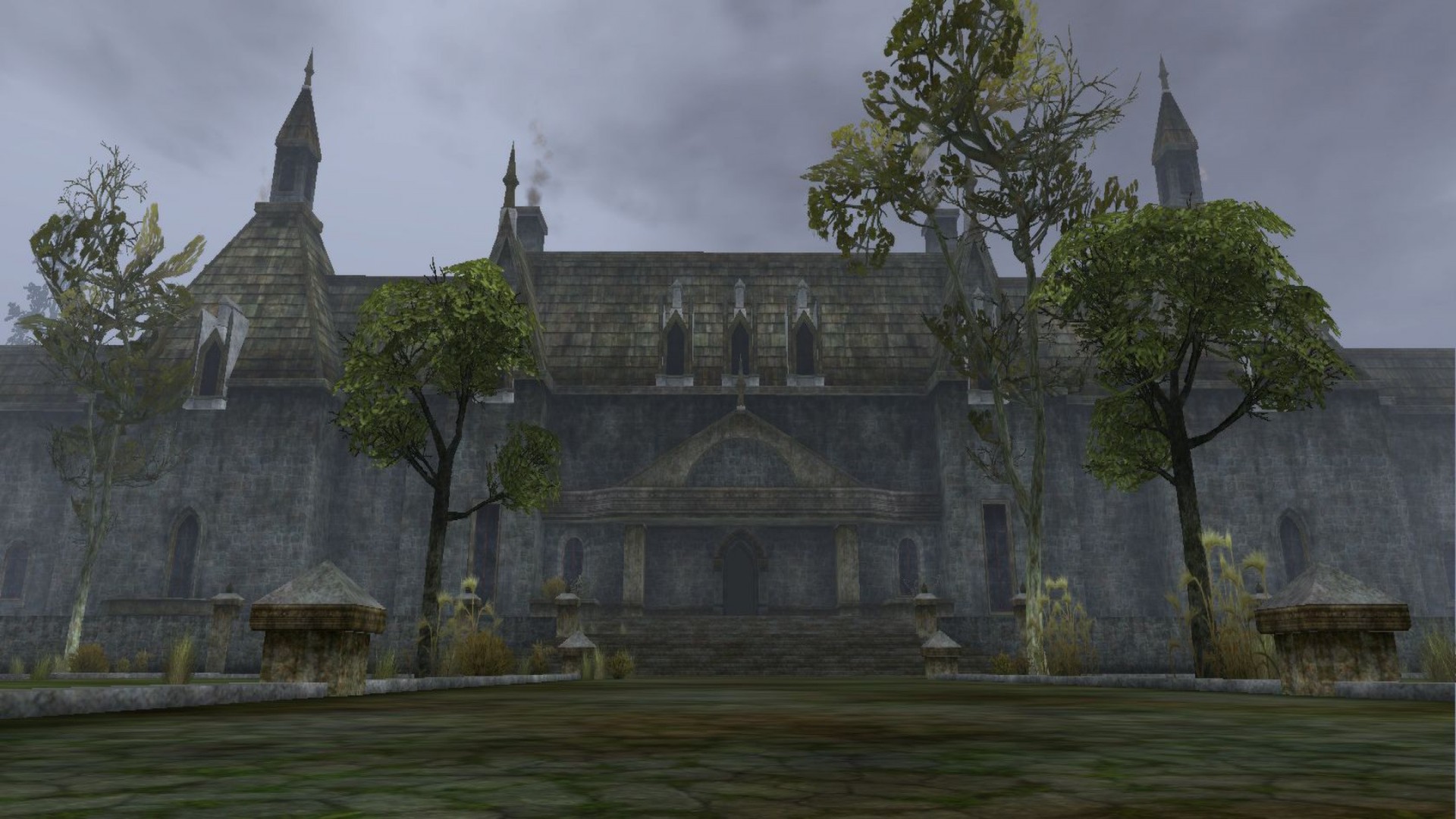
Daybreak’s official reason was blunt, but the cancellation came from several pressures stacking up.
Columbus Nova and the Daybreak transition
In February 2015 Sony sold SOE to the investment firm Columbus Nova, and the studio became Daybreak Game Company. Layoffs hit within days, and Dave Georgeson was among those who left. A project as long, expensive and open-ended as EQ Next was a poor fit for a newly independent studio that suddenly had to justify every budget line without Sony’s backing.
Leadership walked out
The Storybricks partnership, which supplied the AI pitch, wound down in 2015. John Smedley, who had led EverQuest since 1999 and personally announced the sandbox pivot, left Daybreak in July 2015. By early 2016, most of the leaders who had sold EQ Next to the public were gone.
The live games paid for it
Players and press repeatedly described EverQuest and EverQuest II as starved for resources while EQ Next went through its reboots. Developer attention, art budgets and senior staff were pulled toward a game that kept restarting. Cancelling EQ Next let Daybreak redirect what remained to the two games that still earned money.
The letter
On March 11, 2016, Daybreak president Russell Shanks published the cancellation letter. He said the team had built impressive technology but had concluded the game would not be fun enough. He framed the decision as a recommitment to EverQuest and EverQuest II, and confirmed that Landmark would still launch on its own.
Community reaction and legacy
The reaction was harsh. Fans had followed years of livestreams, round-table polls and Landmark founder packs, and many felt the community had been invited to co-design a game that was never close to finished. MMO outlets ranked the cancellation among the biggest disappointments of 2016, and trust in Daybreak took a lasting hit. The Landmark shutdown less than a year later deepened it.
Where the audience went
Much of the displaced audience went to games promising what EQ Next didn’t deliver, though most of those games offered old-school difficulty rather than voxel sandboxes. The clearest example is Pantheon: Rise of the Fallen, founded by Brad McQuaid at Visionary Realms. It pitched itself to disaffected EverQuest players with group-dependent design and a slow, punishing world. Development continued after McQuaid’s death, and the game entered Steam Early Access in December 2024. Other veterans simply returned to the original EverQuest through its progression servers.
Where EverQuest stands in 2025
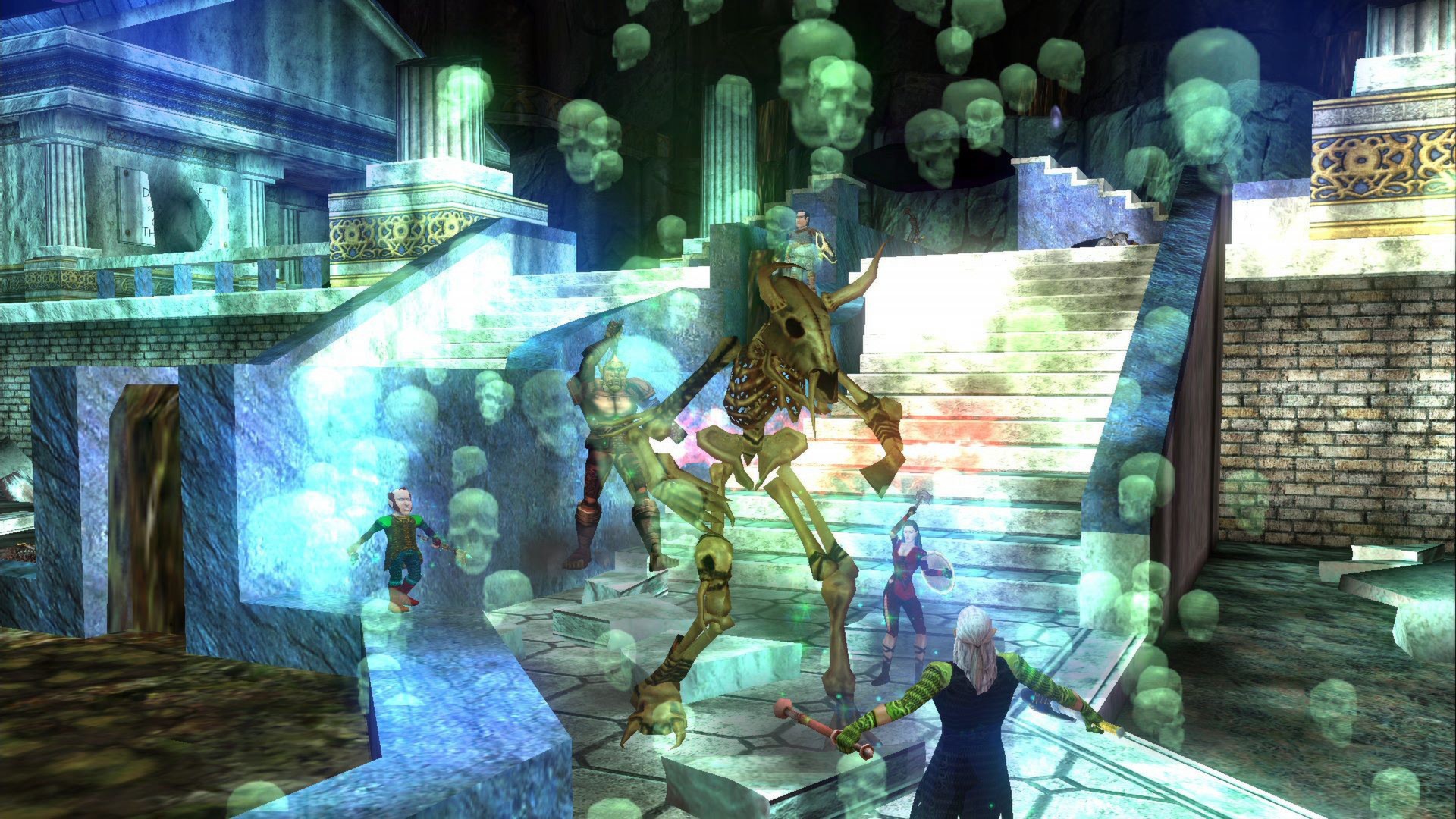
Enad Global 7 agreed to buy Daybreak in December 2020, completing the deal in early 2021. The EverQuest games sit under Daybreak’s Darkpaw Games label. Both still ship a yearly expansion:
- EverQuest has 32 expansions. The 31st, The Outer Brood, launched in December 2024. The official site opened pre-orders and beta for the 32nd, Favors of Fortune, in 2025.
- EverQuest II released its 21st expansion, Scars of Destruction, in late 2024.
EverQuest celebrated its 25th anniversary in March 2024, and EverQuest II marked its 20th in November 2024. Darkpaw publishes a yearly roadmap of planned servers, events and expansion beats on the official sites.
Time-locked progression servers are the main draw for returning players. They restart Norrath at classic content and unlock expansions on a schedule. EverQuest calls them TLP servers, and examples include Yelinak and Oakwynd, while the official news feed announced the Lethar server going live. EverQuest II calls its version TLE servers. Daybreak has never published hard subscriber numbers, so treat any population claim with suspicion.
Smaller live-service touches show up in the official news feed too: Marketplace items like the Quellious Heritage Crate, a Multi-Item Select feature guide for inventory management, and recruitment drives for EverQuest’s long-running volunteer Guide program.
How to start playing today
You need a Windows PC, a free Daybreak account and a verifiable email address. All Access membership is optional unless you want progression servers.
- Register a Daybreak account on the official site. Keep browser cookies enabled, since the account and support pages won’t log you in without them.
- Download the EverQuest or EverQuest II launcher and let the client fully patch.
- Pick a free live server, or a progression server if you have All Access.
- Create a character and finish the tutorial zone.
Common mistakes:
– Mixing Steam and direct accounts. A new account made through Steam can end up separate from an older Daybreak login. Pick one and stick with it.
– Joining TLP or TLE servers without membership. They are All Access only.
– Skipping account security. Turn on Daybreak’s enhanced login protection. Old EQ accounts are a long-standing phishing target, and the help pages on Daybreak’s customer service site explain how to set it up.
New progression servers fill fast in their first week. If you want the classic group experience, join on launch day. A server that opened a year ago may already be several expansions ahead.
FAQ
Why was EverQuest Next cancelled?
Daybreak president Russell Shanks said in March 2016 that the game would not be fun enough despite its technology. Behind that statement sat four internal reboots since 2006, the 2015 sale to Columbus Nova and the layoffs that followed, the exit of John Smedley and Dave Georgeson, the collapse of the Storybricks AI partnership, and years of EverQuest and EverQuest II being starved for resources to keep EQ Next alive.
What happened to EQ Next?
It was cancelled on March 11, 2016 and never reached a public test. Its building spin-off, Landmark, launched in June 2016 and shut down in February 2017. None of EQ Next’s systems carried over into the live games.
Is there going to be an EverQuest 3?
No mainline EverQuest 3 has been announced. Darkpaw’s public plans center on yearly expansions and new progression servers for EverQuest and EverQuest II.
Is a new EverQuest game coming out?
Not a new game, but new content is. EverQuest’s 32nd expansion, Favors of Fortune, and EverQuest II’s yearly expansion cycle are the active releases. Players wanting a fresh old-school MMO in the EverQuest mold mostly look to Pantheon: Rise of the Fallen.
Is Landmark still playable?
No. Its servers shut down in February 2017.
Is EverQuest still free to play?
Yes. Both EverQuest and EverQuest II are free, and the optional All Access membership adds perks and progression server access.